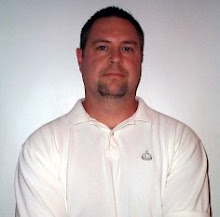
Chiropractic Combined with Posture Training
I recently started receiving chiropractic care that involves posture reeducation, including standing on a vibration platform while wearing a weighted "hat."
A couple months ago, I met a chiropractic husband and wife team at a local wellness fair. I had my own vibration platform there and we talked briefly about the benefits, including stimulating the postural (anti-gravity) muscles through the reflex muscle contractions.
They agreed with me and told me that they include posture training in their clinic. Having worked in two different chiropractic clinics, I was curious to see what they did. I recently started receiving adjustments from them, along with the re-education process.
They took x-rays of my neck, which showed that my cervical spine (neck) isn't what it should be. Too much time sitting and bike riding have apparently done a number on me. I haven't been doing enough joint mobility work, either.
In any case, they seek to restore the proper curve of my neck, so that my nervous system is functioning at an optimal level. This includes stretching for my neck and the work on the vibe plate.
This has me standing on a vibration platform for about four minutes while wearing a "hat" with two pounds of weights in the front. The object is to hold my head in proper alignment while the vibrations stimulate numerous muscle and joint receptors, helping to correct your posture.
I have to say, I do notice a difference in my alignment and I think that there is a lot of promise to this concept. Of course, having my own vibration platform in my studio, I believe strongly in the benefits of this type of training, especially for those with past injuries, who may have difficulty exercising with more traditional methods.
I also recently received some quality deep tissue massage, which has also helped and I have been doing more joint mobility movements to further enhance my health.
The position used at the chiropractic clinic works on static posture in a standing position, while mobility training teaches you to move with proper alignment - posture in motion.
I think that they probably compliment each other, where the combined effects are greater than just one or the other. In any case, I think that you will be seeing more of this in the future.
I still believe in quality soft tissue therapy and proper strengthening exercises, for optimal function. One thing is for sure, in an era that has most of us being very sedentary in our daily lives, programs like this are needed now more than ever.
Get moving!
Brian
Showing posts with label chiropractic. Show all posts
Showing posts with label chiropractic. Show all posts
Friday, August 21, 2009


Friday, August 29, 2008
Chiropractic, Massage Therapy and Stretching:
As the 2008 Olympics have recently wrapped up, there were some amazing stories especially in swimming. While Michael Phelps drew much of the attention with his amazing performances, 41 year old Dara Torres was also an interesting participant.
At an age when most athletes have become "soccer moms," Torres earned a silver medal in swimming. In watching a special on her training, it was interesting to see how much time and money were spent on keeping her healthy.
$100,000 a year to be exact! This included her support team of personal trainers, massage therapists who also provided stretching, regular chiropractic treatments, and nutrition.
More and more athletes continue to perform at a high level at ages when most athletes have already retired. Increased knowledge in physical training and injury prevention have certainly played a large role in this phenomenon.
But aside from the hard work spent in training for their sport, recovering from all this exercise is especially important for the older athlete, whether you are a professional or recreational athlete who runs 10k's or marathons.
This support crew had a lot to do with the success of Torres, though she obviously still put in all the hard work of training. Skilled massage therapy combined with stretching can help you deal with past injuries and increase your sports performance, especially when combined with a quality resistance (strength) training program.
As a massage therapist, I've worked with a few runners and some semi-pro athletes who benefitted from skilled soft tissue therapy and stretching. Some of this has occurred while working in a chiropractic clinic and some of it occurred in the locker room before the game.
I believe strongly in the combination of chiropractic, massage therapy, and stretching when applied together. I've also met several people who are not into chiropractic care for one reason or another. For those people I would suggest finding a clinic where these services are combined by skilled professionals.
Otherwise, you can look for a massage therapist who incorporates some type of stretching and also someone who is knowledgeable in strength training. Even runners can benefit from a good resistance program that increases their core strength and reduces their risk of injury, while making them more efficient runners.
Friday, March 07, 2008
Chiropractic and Massage Therapy for Pain Relief:
Chiropractic and skilled massage therapy is a great combination for pain relief. Recently, I've read a few chiropractic magazines which featured articles dealing with soft tissue injuries. These soft tissues would include your muscles and connective tissues. I believe in chiropractic, but I believe that you also need to treat these soft tissues, in most cases.
As a massage therapist and personal trainer, I have spent almost 4 years working in two chiropractic clinics. Skilled massage therapy can be a great adjunct to the chiropractic adjustment. It makes sense that by removing excess tension from the muscles, the adjustment will be easier and likely have longer lasting effects.
There are various forms of massage therapy. Most people may only think of massage as relaxing, something you go to a spa for, or as a way of pampering yourself. Yes, it can definitely be used this way to help relieve stress and increase your circulation. But there are also specific techniques that deal with pain and injuries.
One of these is myofascial release. Myofascial release is a form of therapeutic stretching developed by a physical therapist named John Barnes in the '60's. I have used it many times while working in chiropractic settings with good results. Sometimes MFR and the chiropractic adjustment were all that was done. Other times, it was combined with deep tissue massage for more permanent results.
The two doctors of chiropractic I worked for were both highly skilled - one conducts seminars nationally and the other works with a professional sports team. When I worked with their patients, those patients saw even further benefits than they would have received from just the adjustments. Many times the bones can be misaligned because of the surrounding muscles and connective tissues.
Sometimes these tissues are too tight and pull too much on the bones, and other times they may not be pulling enough - they are too weak. Often these muscles need some strengthening exercises to help support the joints. Many chiropractors use soft tissue therapy to make changes in these tissues, whether its some form of massage or therapeutic stretching.
They may do this themselves or have a massage therapist do this. General relaxation massage is not what is most effective in these cases, but more specific techniques are needed. I have seen many times where someone I was working with or a colleague, got better results than physical therapy did. You should know that obviously I believe in exercise, particularly to help support the joints.
In these cases, often a greater amount of soft tissue therapy was done to get these results. In an article I recently found, a chiropractor talked about having some upper back pain that got relief from the adjustments, but came back here and there. He received a myofascial release treatment to the muscles of his chest, which were too tight, pulling him out of alignment.
The pain left and had not returned. Two things to take from this - one, that skilled soft tissue therapy is often needed along with the chiropractic adjustment, and two, our bodies need to be balanced front to back, side to side, etc. Myofascial release seeks to treat the connective tissue that surrounds the muscles, called fascia.
This fascia can become tight from trauma, inflammation, and chronic poor posture. There's that P -word again. Chiropractic and skilled massage therapy can do a lot to improve your posture, but ultimately you have to retrain yourself to stand and move while properly aligned with gravity. You will also need some proper core training to stabilize your spine.
For more information on myofascial release, click here.
Friday, August 24, 2007
Chiropractic, Massage and Physical Therapy part II:
So you know that I believe in chiropractic, having seen and felt its positive results. I also believe that most people need some form of treatment for their muscles, in the form of specific massage. I also believe in physical therapy.
Obviously, you aren't going to go to a chiropractor after knee replacement or ACL surgery, you go to a physical therapist. When dealing with non-surgical problems, such as low back pain, I believe in a combination of treatment.
Meaning, you need to treat the bones, muscles, and nervous system. I have seen more than a few people with back pain, where someone got better results by combining chiropractic with skillful massage therapy and stretching, than they did in physical therapy. People that I worked with personally and those who worked with associates of mine.
However, these people still needed specific exercises to help correct these problems and keep them from coming back. Skilled soft tissue work, whether it be deep tissue massage, NMT (neuromuscular therapy), ART (active release) or Myofascial Release is usually needed to release unnecessary tension in the muscles.
Of course, physical therapists practice some form of these treatments. I think in some cases, they don't have the time necessary to do as much as is needed, sometimes. In situations where only modalities such as ultrasound and electrical stimulation are used, and little or no hands on work, is where you see the poor results.
A chiropractor I used to work with, who was also a massage therapist, had a patient who was going to physical therapy for a work related injury. They only did ultrasound treatments and little else, and he got little relief. Combining massage therapy with chiropractic got much better results.
If you are someone who isn't into chiropractic for whatever reason, skilled soft tissue treatments combined with joint mobility movements, posture and corrective exercise will do nicely. Again, working towards prevention with these items is much easier than trying to fix something after it's already broke.
In my opinion, if you don't have good soft tissue quality before trying to start exercising, you might not get all the results you want. If you have knots and excess tension in the muscles, you need to deal with that up front.
Wednesday, August 22, 2007
Chiropractic, Massage Therapy, or Physical Therapy:
Today we will continue yesterday's discussion about the different types of care for pain relief. Being a personal trainer/massage therapist who has worked in both chiropractic and physical therapy, gives me a unique vantage point to discuss these.
Obviously, these are my opionions and you know what they say - everyone has one. I happen to believe in both chiropractic and physical therapy. Chiropractors focus on subluxations of the spine - based on the idea that a vertebrae out of place interferes with the nerve that flows from the spine.
Nerve flow that is blocked or interfered with in any way means that the body isn't working as efficiently as possible. This blocked nerve flow can also create pain, so they adjust the vertebrae to eliminate this nerve interference. Some chiropractors focus all their efforts on this subluxation, while others add different treatments and modalities to treat the muscles and connective tissues.
Having worked for two highly skilled and busy chiropractors, I can say that the patients that I performed massage, stretching, and corrective exercise with, definitely needed my services, and without these additional treatments, wouldn't have had as much benefit to their overall health.
I believe that there are times that someone only needs an adjustment, I also believe that these people are in the minority. Meaning, most people have excess tension in the muscles surrounding (connecting to) the joints, that needs to be addressed. In my opinion, this is why you have to continually receive these adjustments, is because the muscles aren't being treated.
Nerves can be pinched or interfered with as they flow from the vertebrae, but they can also be interfered with by the muscles and connective tissue. A muscle that is too tight from overuse, poor posture, or injury can press down on the nerves and blood vessels that lie underneath them, causing pain.
So if the nerve is fine where it leaves the vertebrae, but is being interfered with by excess tension in the muscles, you have to treat the muscles that are imbalanced. Various forms of massage and stretching is needed in this case.
In most cases, this is not the relaxation type of massage, but a specific treatment done by someone who understands how all the muscles work together.
You need a balance of tension in the muscles surrounding the joints. Enough stability, combined with the right amount of mobility. If someone spends their week sitting in poor posture and doesn't move their joints enough, all the chiropractic treatments will be of limited value.
In closing, I believe strongly in the need for highly skilled soft tissue treatment with most people who have pain. In many cases, this works well with the chiropractic adjustment, so that the combined effects are stronger than either one on their own. I also believe that corrective exercise is needed in most cases.
Stay tuned, as we will discuss this issue further.
Tuesday, August 21, 2007
Chiropractic for Scapula Pain:
In today's blog I will address a question from a reader who asked, "do you have a stretch for scapula syndrome. Been to doctors, chiropractors they can't seem to help." Jeff B.
With pain between the shoulderblades, there is often a postural issue and/or an overuse issue (repetitive motion injuries). In either of these situations, chiropractic might help to some degree, but the soft tissues will need to be addressed.
The soft tissues - muscles and connective tissue - that surround the shoulderblade likely have an imbalance of tension. Usually, the muscles between the shoulderblade and spine are overstretched due to poor posture. The shoulders and neck are rounded forward, placing unnecessary stress to the joints.
The muscles that attach to the front of the shoulder are likely tight, which pulls the shoulderblade forward, causing the muscles between the scapula and spine to become overstretched. This can create pain in these muscles.
So ultimately, there is an imbalance in tension between the muscles of the front and back of the body. Just addressing the area that hurts, the scapula, won't solve the problem if this muscular balance isn't corrected. Getting good quality massage for all the muscles that attach to the scapula and shoulder is needed.
Therapeutic stretching will also help, but the muscles between the shoulderblades need to be strengthened in most cases. Rarely, these muscles won't need to be strengthened, but about the only time you will see this is with someone with "military" posture - someone who stands with their chest pushed forward too far - as if standing at attention.
Again, this is rarely seen in our overly seated society. Meaning, most of us spend so much time sitting down that it affects our posture and our ability to stand up straight.
So physical therapy may be needed, or you can find someone who does some deep tissue massage, NMT, ART, or Myofascial Release. Make sure they understand the body's need for balance and that they don't just chase the pain.
Remember, where it hurts isn't necessarily where the problem is, that may be the effects and not the cause. Tight knots in the muscle, such as triggerpoints, can refer pain elsewhere in the body.
For more information, you might want to read my blog article - Don't Chase the Pain or read about the different types of deep tissue massage. Tomorrow I will continue to discuss the role of chiropractic, massage therapy, and physical therapy in dealing with pain.
Subscribe to:
Posts (Atom)